Landlords
Smoke and carbon monoxide alarms: a Northampton landlord checklist
A practical guide to where alarms are required, tenancy-start checks and what to do when a tenant reports a fault.
The current rules in England
Northampton landlords should treat smoke and carbon monoxide alarms as a room-by-room safety check, not a one-off purchase. The current rules require at least one smoke alarm on every storey where there is a room used wholly or partly as living accommodation.
A carbon monoxide alarm is required in any room used wholly or partly as living accommodation that contains a fixed combustion appliance. This can include a gas or oil boiler, a gas fire or a wood-burning stove. Gas cookers are specifically excluded from this requirement, although landlords can still provide an alarm where a risk assessment suggests one would be sensible.
Check the property, not just the appliance list
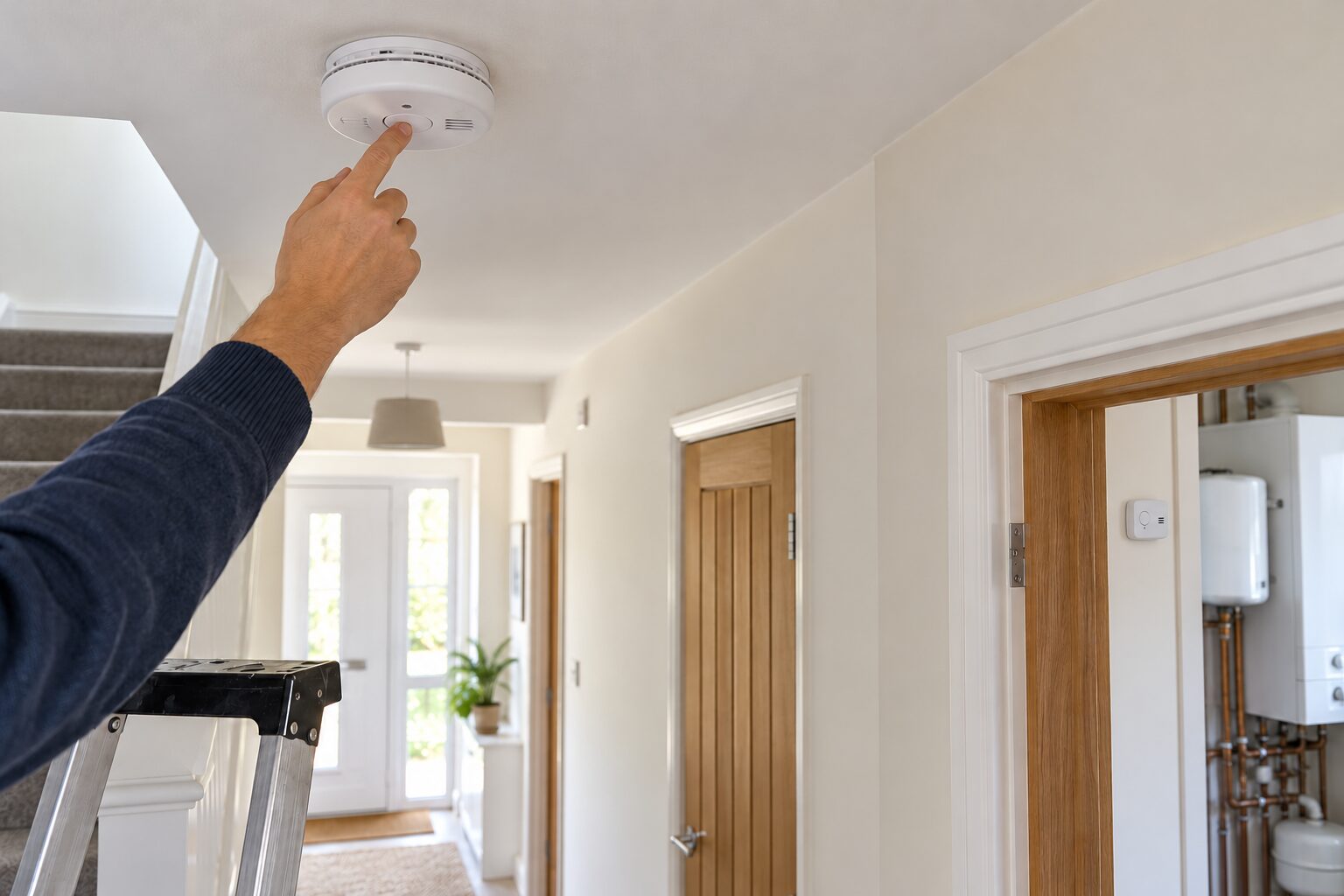
Walk through each floor and note how every room is used and which fixed fuel-burning appliances it contains. Do not assume that one carbon monoxide alarm elsewhere in the property covers every relevant room. Install alarms in an effective position and follow the manufacturer’s instructions on height, distance from an appliance and maintenance.
The regulations do not require one particular alarm technology or power source. A suitable battery alarm may comply, as may a mains-powered unit, but the alarm should meet the applicable product standard and be appropriate for its location. A carbon monoxide alarm does not replace annual gas-safety duties or proper appliance servicing.
Test alarms when a new tenancy begins
For a new tenancy, the landlord must check that each required alarm is in proper working order on the day the tenancy begins. Build that test into the check-in process rather than relying on an earlier inspection. Record the date, property, alarm locations and test result, and give the tenant clear instructions for regular testing and reporting problems.
Photographs and a signed inventory entry can provide a useful record, but they should support the physical test rather than replace it. If a managing agent carries out check-in, make sure responsibility for testing and recording the result is explicit.
Act when a tenant reports a fault
Once a tenant or their representative reports a problem, the landlord must investigate. If the alarm is found not to be working, it must be repaired or replaced as soon as reasonably practicable. Ask tenants to report chirping, damage or failed test buttons promptly, and keep a written trail of the report, access arrangements and completed work.
If access is refused, communicate in writing, offer reasonable appointment options and retain evidence of each attempt. GOV.UK guidance says landlords should work with tenants to understand the problem and be able to show the local authority that reasonable steps were taken.
A simple landlord checklist
Review alarms alongside the EPC, gas-safety record and electrical-safety documents before each letting, while remembering that these are separate legal duties. Local housing authorities can serve a remedial notice where the alarm rules are not met, and failure to comply can lead to a financial penalty of up to £5,000.
- Map every storey, room and fixed combustion appliance.
- Install each alarm in line with its manufacturer’s instructions.
- Test every required alarm on the first day of a new tenancy.
- Record tests and give tenants clear reporting information.
- Investigate reported faults and repair or replace promptly.
Sources & further reading
Guidance checked on .
- GOV.UK: Smoke and Carbon Monoxide Alarm Regulations guidance for landlords and tenants
- The Smoke and Carbon Monoxide Alarm (Amendment) Regulations 2022
General guidance for homes in England. For an unusual property or a specific compliance question, check the current official guidance and seek advice for your circumstances.