Home energy
Heating controls explained: a practical autumn guide
Understand what your programmer, room thermostat, radiator valves and hot-water controls do before colder weather arrives.
Know what each control does
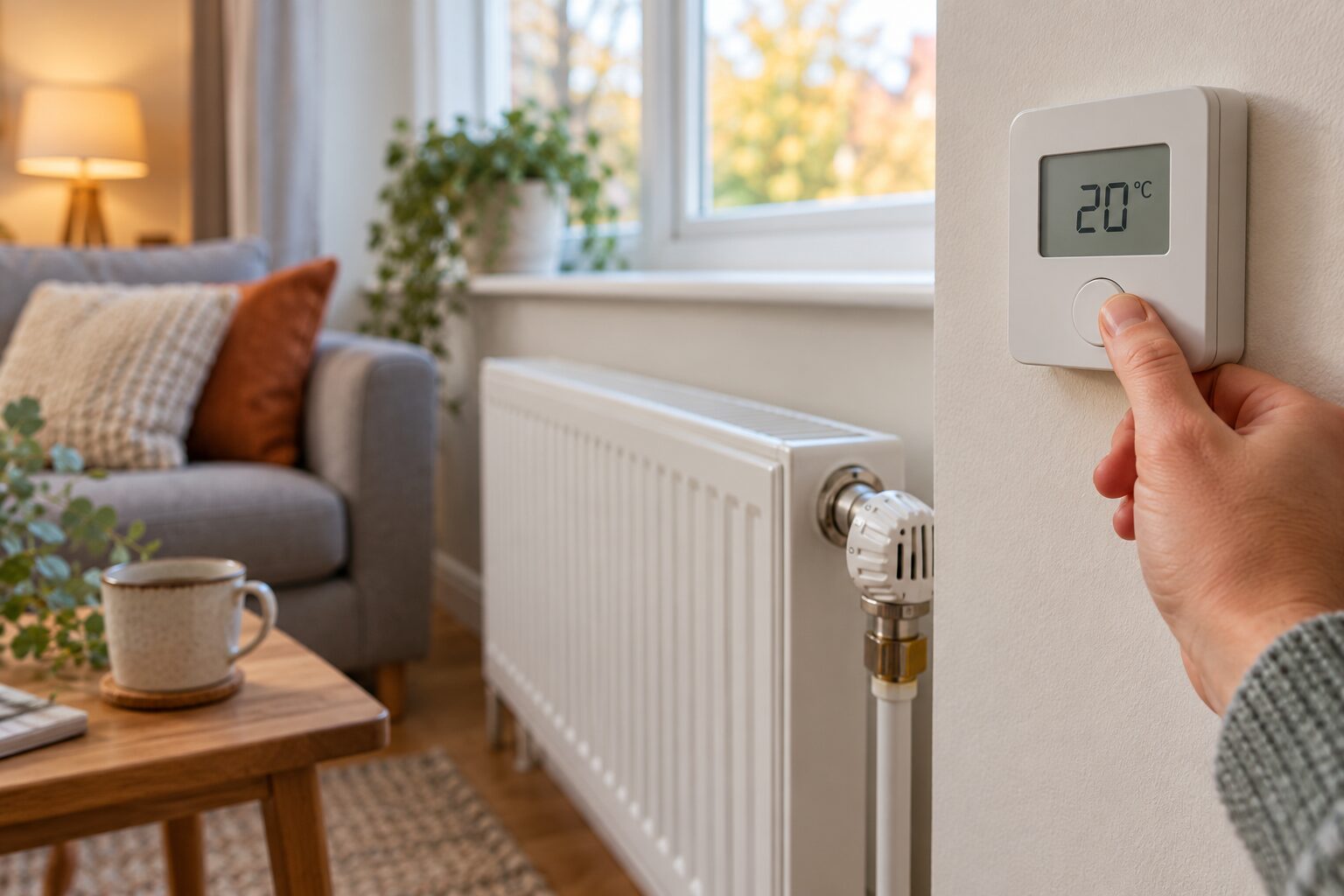
For many Northampton homes with a gas, oil or LPG boiler, the main controls are a programmer or timer, a room thermostat and thermostatic radiator valves (TRVs). The programmer decides when the heating runs, the room thermostat sets the target temperature for the home, and TRVs adjust individual radiators. Homes with a hot-water cylinder should also have a cylinder thermostat.
These controls work as a team. A sensible schedule prevents unnecessary heating when nobody is home, while the thermostat and TRVs help avoid making every room warmer than it needs to be. Heat pumps and electric heating systems can behave differently, so follow the manufacturer’s instructions or installer’s advice for those systems.
Start with the heating schedule
Set the heating periods around your normal routine, then make small adjustments after observing how quickly the home warms up. On colder days, starting the heating slightly earlier is usually more useful than turning the thermostat much higher. A higher thermostat setting does not make the home heat up faster; it simply asks the system to keep heating until it reaches a higher temperature.
Check that the programmer’s clock is correct, especially after a power cut or seasonal clock change. Use a temporary override when plans change, but remember to return the system to its normal programme afterwards.
Use the thermostat and TRVs together
Energy Saving Trust says a room thermostat should be set to the lowest comfortable temperature, typically between 18°C and 21°C. Comfort and health needs come first, particularly for older people, babies and anyone with a health condition.
TRVs can keep a living room warmer while using a lower setting in a spare bedroom or other less-used space. Avoid leaving rooms completely unheated for long periods, because colder surfaces can increase the risk of condensation and mould. Keep curtains, furniture and radiator covers from enclosing a TRV, as trapped warm air can make it sense the wrong temperature.
Check hot-water and boiler settings carefully
If you have a hot-water cylinder, Energy Saving Trust advises setting its thermostat to 60°C. For a regular or system boiler that heats the cylinder, the common boiler control should not be set below 65°C, so the stored water can reach the recommended temperature. Combination boilers do not have a cylinder, and their controls work differently.
Reducing a boiler’s flow temperature can improve efficiency in some homes, but do not change settings blindly. The right approach depends on the boiler, controls and whether it also heats a cylinder. Check the manual or ask a competent heating engineer if the controls are unclear.
A five-minute check before winter
Run through the controls before the first prolonged cold spell. That gives you time to replace batteries, find the manual or arrange help without waiting until the house is cold.
- Confirm the programmer shows the correct day and time.
- Review heating periods against your current routine.
- Make sure the room thermostat is unobstructed and away from strong heat sources.
- Turn each TRV gently to check that it moves and choose a sensible room-by-room setting.
- Check the cylinder thermostat if your home has stored hot water.
- Keep the boiler and controls manuals somewhere easy to find.
Sources & further reading
Guidance checked on .
General guidance for homes in England. For an unusual property or a specific compliance question, check the current official guidance and seek advice for your circumstances.