EPC advice
Buying a Northampton home? Five things to check on the EPC
Use the EPC to compare efficiency, spot useful questions and understand possible improvements before committing to a purchase.
1. Confirm that the certificate matches the property
The seller or estate agent should show you the Energy Performance Certificate, and you can download it free from the official register. Start with the basics: check the address, property type, assessment date and expiry date. An EPC is normally valid for 10 years.
A valid certificate can still pre-date a new boiler, insulation, solar panels or an extension. If the home has changed since the assessment, ask what work was completed and request invoices, warranties or other evidence. The existing EPC may remain legally valid while no longer describing the home exactly as it is today.
2. Compare the current and potential ratings
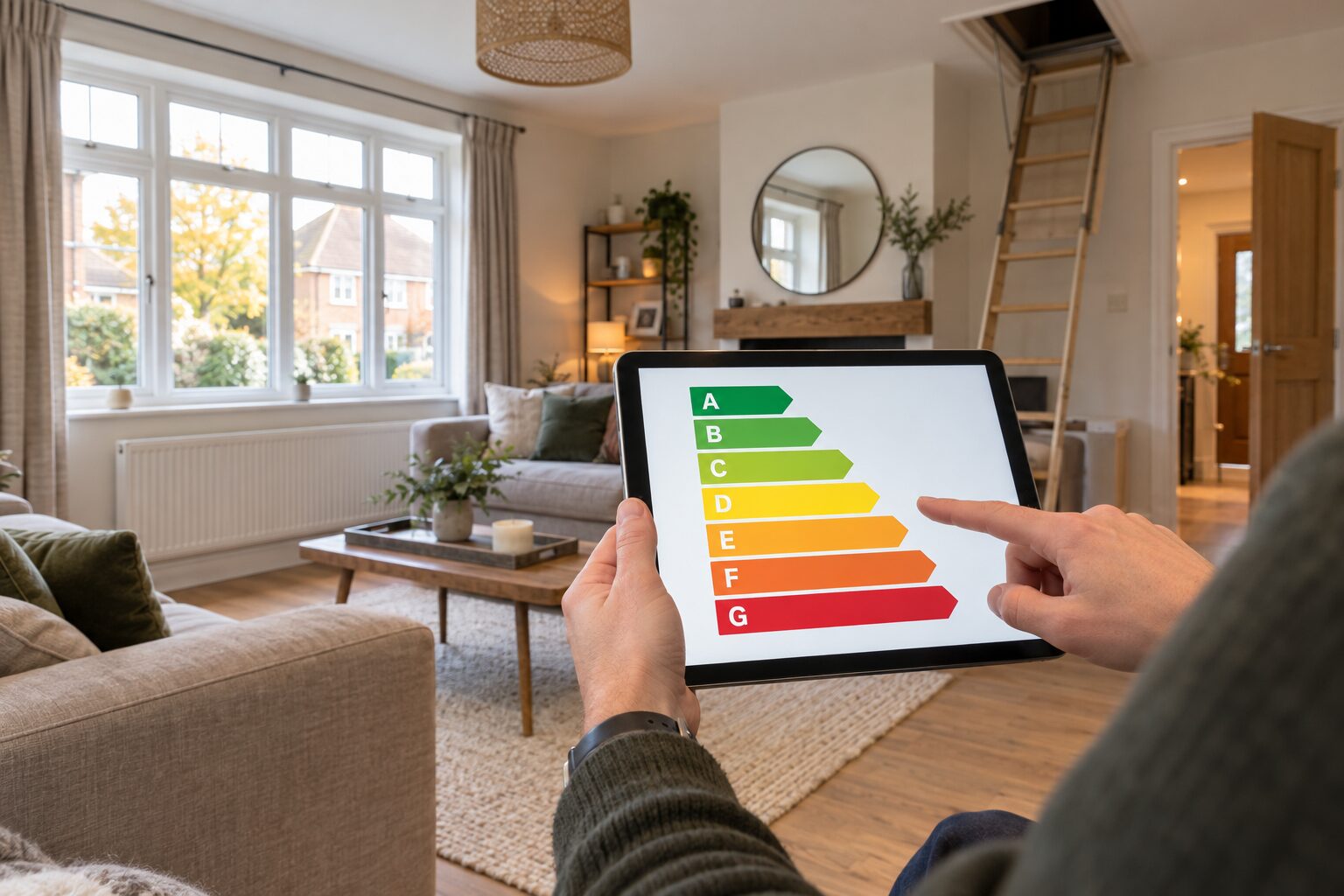
The familiar A-to-G chart shows the property’s current energy-efficiency rating, with A the most efficient and G the least. The potential rating estimates where the property could reach if the certificate’s recommended measures were completed.
Treat that potential as a useful scenario, not a guaranteed result. It assumes the listed measures are suitable and carried out in the modelled sequence. Use it to compare homes and frame questions, but obtain proper advice before budgeting for major work.
3. Read the property-feature descriptions
Look beyond the headline band. The certificate describes elements such as walls, roof, windows, heating, hot water and lighting, with an indication of their energy performance. This can highlight questions to raise during a viewing: is loft insulation visible, are windows double glazed, and what heating system is actually installed?
These entries are energy assessments, not condition ratings. A strong energy rating does not confirm that a roof, boiler or window is in good repair, so the EPC should be considered alongside a survey and the conveyancing process.
4. Understand the estimates
An EPC includes typical energy-use information and estimated costs, plus possible costs and savings for recommended measures. These figures help compare properties on a consistent basis, but they are not a quotation or a prediction of your personal bills. Actual use will depend on occupancy, heating habits, tariffs and weather.
For anything substantial, obtain current quotations and check whether planning permission, building regulations, ventilation changes or specialist design advice may be needed. Avoid choosing an improvement solely because it appears inexpensive on an older certificate.
5. Check how the recommendations work together
Recommendations are presented in an order, and later rating improvements generally assume earlier measures have already been installed. That matters when comparing a simple lighting change with insulation or a new heating system. Energy Saving Trust also advises thinking about the whole building because changes can affect heat, air and moisture movement.
Before making an offer, use the EPC to create a short question list rather than treating it as a pass-or-fail document.
- Which recommended measures have already been completed?
- Is there evidence for insulation that was not visible during the assessment?
- Are warranties or commissioning documents available for newer systems?
- Which improvements need professional design or ventilation advice?
- Would a newer EPC help reflect recent changes?
Sources & further reading
Guidance checked on .
- GOV.UK: Energy Performance Certificates when selling a home
- GOV.UK: Guide to EPCs for the marketing, sale and let of dwellings
- Energy Saving Trust: Energy performance certificates explained
General guidance for homes in England. For an unusual property or a specific compliance question, check the current official guidance and seek advice for your circumstances.